

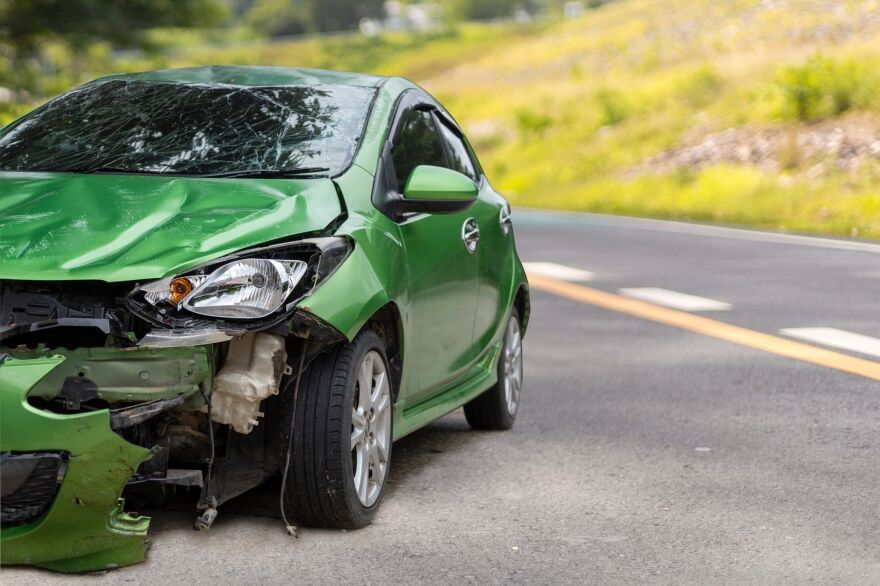
Yes. Compensation may be available after a single-vehicle accident in Kentucky, but the source of that compensation depends on how the crash happened and whether you were the driver or a passenger.
A single-vehicle crash does not automatically mean the driver was solely responsible. Defective tires, brakes, steering systems, airbags, and other vehicle components can contribute to loss-of-control accidents. More frequently, a passenger may be injured because of the driver’s negligence. Even a driver who caused a single-vehicle crash may still have access to certain insurance benefits for medical expenses and lost income.
Determining what caused the crash and identifying potential sources of recovery are important first steps. A Paducah car accident lawyer can investigate the circumstances of the accident and determine whether insurance coverage, a driver’s negligence, or another legal theory may provide compensation.
Compensation May Be Available Even Without Another Driver
Kentucky’s auto insurance system provides certain benefits regardless of who caused an accident. Under Kentucky’s Motor Vehicle Reparations Act, basic reparation benefits, commonly called PIP benefits, may cover qualifying medical expenses, lost income, and certain other losses following a crash.
As a result, an injured driver does not necessarily need to prove that someone else caused the accident before receiving these benefits. Whether PIP coverage is available depends on the applicable insurance policy and whether Kentucky’s no-fault provisions were rejected, among other factors.
PIP benefits, however, are different from a personal injury claim against another responsible party. A driver who simply loses control because of his or her own negligence generally cannot recover pain and suffering damages from someone else. If a defective vehicle component or another party’s negligence contributed to the crash, additional avenues of compensation may become available.
Defective Vehicles and Vehicle Components
Automobile manufacturers have a responsibility to place reasonably safe products into the marketplace. Kentucky product liability law may allow injured consumers to pursue claims when a defective vehicle or vehicle component causes an injury.
A product liability claim is not automatic. The injured person must establish that a defect existed and that the defect caused or contributed to the injury. Kentucky law also recognizes certain presumptions and defenses in product liability cases.
Two common types of vehicle defects are:
- Design Defect: A product may be unreasonably dangerous because of the way it was designed. In automobile cases, potential design defects may involve steering systems, fuel systems, structural components, tires, or other parts whose design creates an unreasonable safety risk.
- Manufacturing Defect: A manufacturing defect occurs when a particular product does not conform to its intended design because something went wrong during production or assembly. The Takata airbag recalls are a well-known example of defective vehicle components causing serious injuries and deaths.
Failure-to-warn claims may also arise when a manufacturer knows or should know that a product presents a particular danger but fails to provide adequate warnings or instructions.
Product defect cases often require engineers, accident reconstruction specialists, vehicle records, recall information, and physical inspection of the damaged vehicle. Preserving the vehicle after a crash can therefore be extremely important.
Compensation in a successful product liability case may include economic losses such as medical expenses and lost income, as well as noneconomic losses such as pain and suffering. Punitive damages may also be available in exceptional circumstances, but Kentucky requires clear and convincing evidence of the conduct necessary to support such an award.
Passenger Injuries in Single-Vehicle Accidents
Passengers injured in single-vehicle crashes may also have claims for compensation.
If the driver’s negligence caused the accident, an injured passenger may be able to pursue a claim against the driver’s liability insurance. Speeding, distracted driving, impaired driving, unsafe turns, and failure to adjust to weather or roadway conditions are examples of driver conduct that may support a negligence claim.
These cases can be emotionally difficult when the driver is a friend or family member. Some passengers worry that pursuing compensation means personally attacking or financially harming someone they care about.
In most cases, however, automobile liability insurance is the primary source of payment. The purpose of the claim is to compensate the injured passenger for losses resulting from the accident.
Health insurance does not eliminate the need for an injury claim. Health coverage may pay some accident-related medical expenses, but it generally does not compensate an injured person for losses such as pain and suffering or diminished earning capacity. Depending on the type of health plan and the circumstances, an insurer may also have reimbursement or subrogation rights for accident-related expenses it paid.
Saladino & Schaaf can evaluate these different sources of coverage and determine how they may affect a passenger’s ultimate recovery.
What About the Seat Belt Defense?
Seat belt use can become an issue in some passenger injury claims.
Kentucky law generally requires drivers and passengers to wear properly adjusted and fastened seat belts. However, failure to wear a seat belt does not constitute negligence per se.
Kentucky courts have recognized that seat belt nonuse may still be relevant in a personal injury case when there is competent evidence connecting the failure to use the restraint to the injuries being claimed. In other words, simply showing that an injured passenger was not wearing a seat belt is not enough.
Instead, the defense must establish a meaningful connection between the lack of seat belt use and the particular injury or increased severity of that injury. If that connection is supported by appropriate evidence, seat belt nonuse may affect the amount of compensation recoverable for the injuries that were caused or enhanced by the failure to use the restraint.
This is an important distinction. A passenger’s failure to wear a seat belt does not cause the driver to lose control or cause the collision itself. The relevant question is whether seat belt use would have prevented or reduced particular injuries resulting from the crash.
Connect With Saladino & Schaaf, PLLC Today
Single-vehicle accident compensation in Kentucky can come from several different sources. Depending on the circumstances, those sources may include PIP benefits, the driver’s liability coverage, or a claim involving a defective vehicle or vehicle component.
The attorneys at Saladino & Schaaf can investigate single-vehicle accidents to determine what caused the crash, identify what insurance coverage applies, and determine whether another party may be legally responsible for the resulting injuries.
To schedule your free consultation, call (270) 444-0406 in Paducah or (270) 753-1529 in Murray, or contact us online. We represent injured clients throughout McCracken County, Calloway County, and surrounding Western Kentucky communities.