

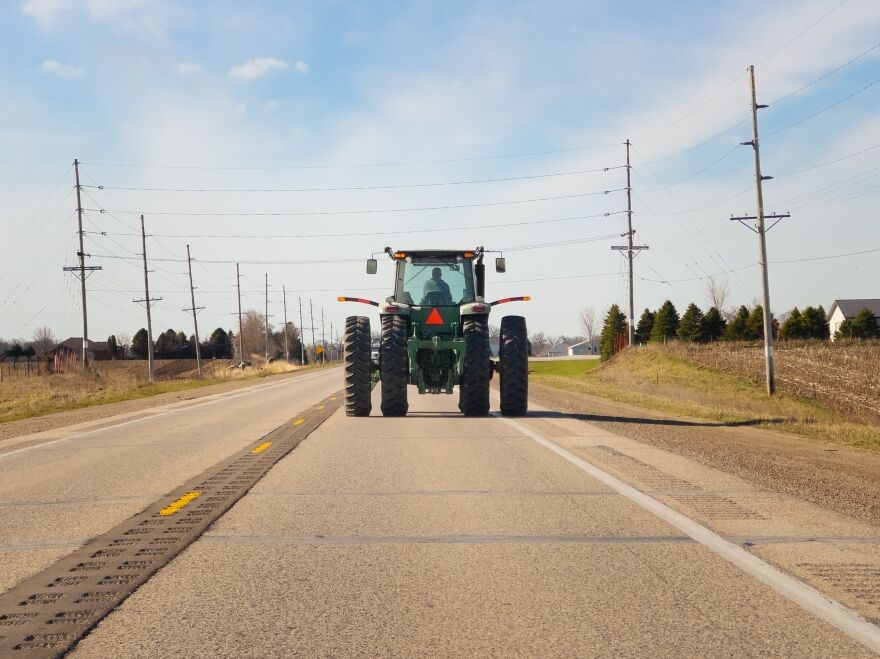
Tractors, combines, wagons, and other farm equipment are a familiar sight on Kentucky’s rural roads, especially during planting and harvest seasons. Farmers generally have the right to use public roads to move equipment between properties, but they also have a responsibility to do so safely.
Farm equipment presents unique risks because of its size, width, limited visibility, and slow speed. A driver traveling at highway speed may come upon a tractor faster than expected after cresting a hill or rounding a curve. Unexpected turns can also create confusion for motorists attempting to pass farm equipment.
When a serious collision occurs, determining responsibility may require examining the conduct of both drivers, the equipment’s condition and visibility, applicable Kentucky traffic laws, and whether the operator was employed by a farm or other business.
A Paducah personal injury lawyer can investigate these issues and help determine who may be legally responsible for injuries caused by a farm equipment accident.
Serious Injuries in Farm Equipment Accidents
Collisions involving passenger vehicles and large agricultural equipment can result in severe injuries. The difference in size, weight, height, and design can expose occupants of smaller vehicles to substantial forces during a crash.
Common injuries may include:
- Traumatic Brain Injuries: A collision can cause a concussion or a more severe traumatic brain injury when a blow, jolt, or rapid movement disrupts normal brain function. Even a mild TBI can cause headaches, dizziness, memory problems, concentration difficulties, or other symptoms, while more severe injuries can result in long-term disability.
- Broken Bones and Orthopedic Injuries: High-impact crashes may cause fractures of the arms, legs, ribs, pelvis, or other bones. Serious fractures can require surgery, rehabilitation, and extended time away from work.
- Internal and Spinal Injuries: Blunt-force trauma can damage internal organs or cause internal bleeding. Neck, back, and spinal cord injuries can also occur, particularly when a vehicle rolls over or an occupant is thrown violently inside the passenger compartment.
Pre-existing health conditions may complicate recovery, but they do not necessarily prevent an injured person from recovering compensation. Under the eggshell plaintiff principle, a negligent party generally takes the injured person as they find them and may be responsible when an accident aggravates a pre-existing condition.
What Duty Does a Farm Equipment Operator Have?
Farm equipment operators do not automatically owe other motorists a special “utmost care” standard simply because they are operating large agricultural machinery.
Kentucky law requires vehicle operators on a highway to drive carefully, with due regard for the safety and convenience of other vehicles and pedestrians. The law also prohibits reckless or negligent operation that endangers people or property.
For a farm equipment operator, reasonable care may include maintaining control of the machinery, making safe turns, watching surrounding traffic, using required lights and markings, and avoiding unnecessary obstruction of the roadway.
Kentucky courts have long recognized that farm tractors cannot be operated on public highways without regard to ordinary roadway safety rules.
The same principle applies to the driver of the passenger vehicle. Motorists approaching slow-moving agricultural equipment must pay attention, maintain a safe following distance, avoid unsafe passing, and adjust their speed when road or visibility conditions require it.
Kentucky Rules for Slow-Moving Farm Equipment
Kentucky law has specific requirements for slow-moving vehicles.
A slow-moving vehicle includes farm machinery capable of traveling no more than 25 miles per hour. These vehicles generally must display a properly positioned, clean, reflective slow-moving vehicle emblem when operated on Kentucky public roads.
Kentucky also imposes lighting requirements. Slow-moving vehicles operating on a highway must have a light on the left side that makes the vehicle’s outline visible to approaching traffic from at least 500 feet. Certain motorless vehicles are subject to additional requirements between sunset and sunrise.
Lane position can be equally important. Kentucky law requires slow-moving vehicles to travel as close as practicable to the right-hand boundary while allowing faster traffic reasonably free passage to the left. Drivers being overtaken must also provide reasonable assistance to allow safe clearance.
That does not mean a tractor operator must move onto an unsafe or unstable shoulder whenever another vehicle approaches. The circumstances of the road, the width of the equipment, oncoming traffic, and the condition of the shoulder can all affect what is reasonably safe.
Turns are another frequent source of farm equipment accidents. Kentucky requires drivers to determine that a turn or lane change can be made with reasonable safety and to provide appropriate signals. Because different signaling provisions can apply depending on how the equipment is classified, the facts and equipment involved should be examined carefully after a turning collision.
Can Violating a Safety Law Establish Negligence?
A violation of a Kentucky safety statute may be important evidence in a farm equipment accident claim.
In qualifying circumstances, Kentucky recognizes negligence per se through KRS 446.070. Generally, the injured person must fall within the class the statute was intended to protect, and the injury must be the type of harm the law was designed to prevent.
That means a missing slow-moving vehicle emblem, improper lighting, unsafe lane position, or failure to signal could become significant if the statutory violation contributed to the collision.
However, violating a statute does not automatically guarantee liability. The injured person must still establish the necessary connection between the violation and the accident or injuries.
Can the Farm or Equipment Owner Also Be Responsible?
The equipment operator may not be the only potentially liable party.
If the operator was an employee performing within the scope of employment, the employer may be vicariously liable for the employee’s negligence under Kentucky’s respondeat superior doctrine.
Other claims may depend on the circumstances. For example, a farm that knowingly allowed unsafe equipment onto the road, failed to maintain essential safety components, or permitted an unqualified person to operate machinery could raise additional questions about responsibility.
Ownership alone does not necessarily establish liability. An investigation may possibly identify who operated, controlled and maintained the equipment and what the operator was doing when the collision occurred.
Comparative Fault in Kentucky Farm Equipment Accidents
Farm equipment accidents often involve allegations against both drivers.
Suppose a tractor was traveling farther into the roadway than reasonably necessary, while the approaching driver was distracted by a cellphone. Evidence could establish that both contributed to the collision.
Kentucky’s comparative-fault rules allow responsibility to be divided among the parties. A claimant’s compensation is reduced according to the percentage of fault assigned to that claimant.
For example, if an injured driver sustained $200,000 in damages but was assigned 20% of the fault, the recoverable damages would generally be reduced by that 20%.
Photographs of the road and vehicle positions, tractor lighting and reflective markings, cellphone records, witness statements, skid marks, vehicle damage, surveillance footage, and electronic vehicle data may all help establish what happened.
The width of the road, nearby curves or hills, time of day, weather conditions, and visibility of the farm equipment may also be relevant.
Reach Out to Saladino & Schaaf Today
Farm equipment accidents in Kentucky can involve unusual traffic laws, multiple potentially responsible parties, and serious disputes over comparative fault.
The attorneys at Saladino & Schaaf can investigate the farm equipment, roadway conditions, operator conduct, and available evidence to determine how the accident occurred and who may be responsible.
To schedule a free consultation, call (270) 444-0406 in Paducah or (270) 753-1529 in Murray, or contact us online. We represent injured clients throughout McCracken County, Calloway County, and surrounding Western Kentucky communities.