

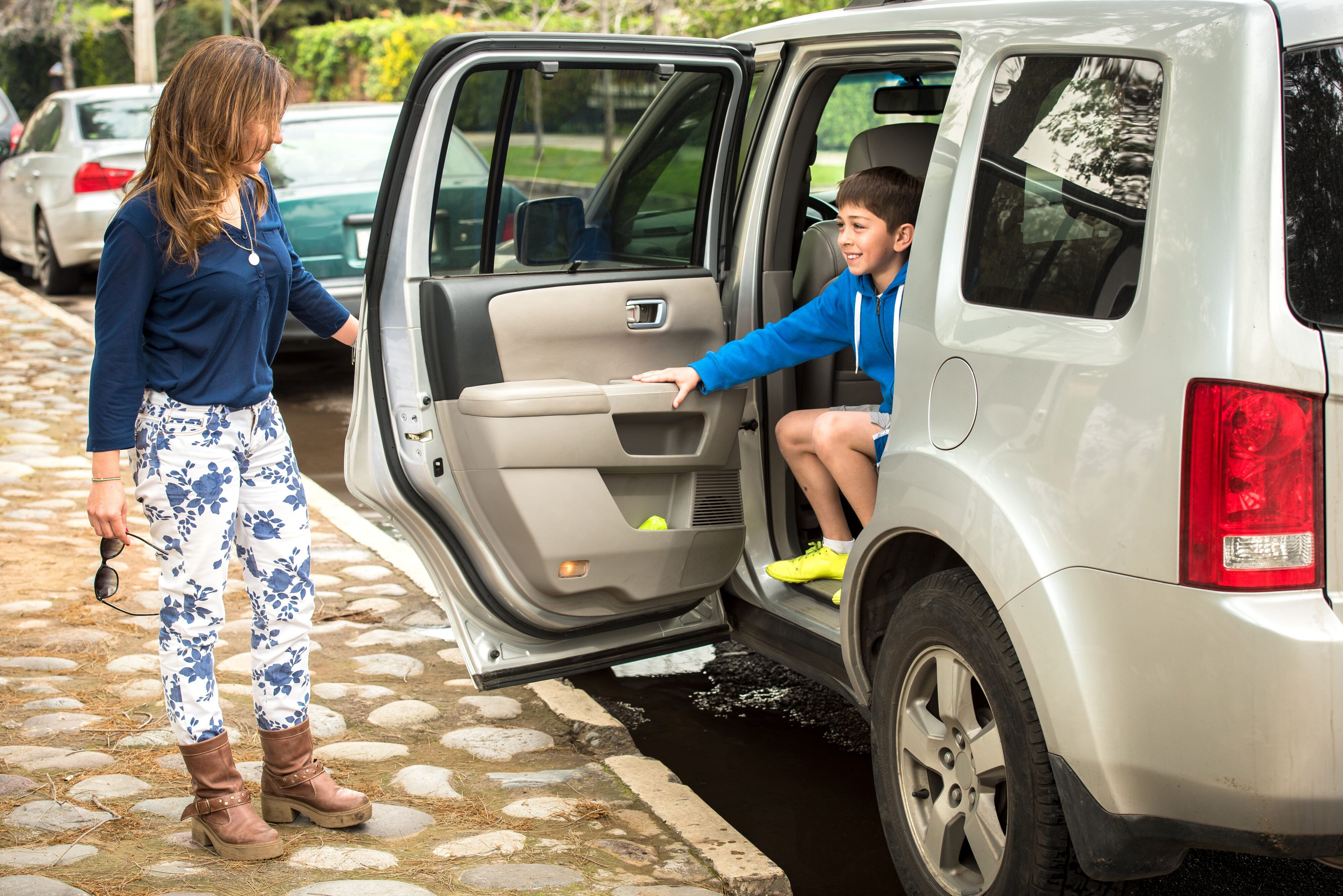
School drop-off and pickup lines can become some of the most congested places on the road. Parents are trying to get children to school on time, vehicles are stopping and starting, buses are arriving, crossing guards may be directing traffic, and students are walking between cars.
When an accident happens in a Kentucky school drop-off line, liability generally depends on who acted negligently and whether that negligence contributed to the accident. The fact that a crash happened on school property does not automatically make the school responsible.
Who Is Usually Liable for a School Drop-Off Accident?
In many cases, the driver who caused the collision is responsible, just as they would be in an accident on a public road.
A parent who looks away from traffic and rear-ends a stopped vehicle, for example, may be liable for resulting injuries. The same could be true of a driver who ignores the designated traffic pattern, pulls around stopped vehicles, fails to yield to a pedestrian, or backs into another vehicle.
Several behaviors can contribute to school drop-off accidents, including:
- Distracted driving, including checking texts or school apps
- Following too closely in stop-and-go traffic
- Backing without making sure the path is clear
- Stopping or parking in prohibited areas
- Making unexpected U-turns or other unsafe maneuvers
- Failing to yield to pedestrians
- Ignoring crossing guards, signs, or traffic signals
More than one person can sometimes contribute to the same accident. Kentucky follows a comparative fault system, which means responsibility can be divided among multiple parties based on their respective contributions to the accident.
Why Are Reversing Vehicles Particularly Dangerous Around Schools?
Backing accidents are especially concerning around schools because young children can be difficult to see behind a vehicle.
A driver pulling backward from a parking space or reversing after missing a drop-off point has a responsibility to make sure the path is clear. Backup cameras and warning systems can help, but drivers must still pay close attention to their surroundings.
Liability can become more complicated when two vehicles are moving at the same time. For example, one parent might be backing out while another is driving through the parking lot. Determining fault could require examining vehicle damage, witness statements, security footage, dashcam video, and the movements of both vehicles immediately before impact.
Can Illegal Stopping Affect Who Is at Fault?
School traffic plans are intended to make the movements of vehicles and students predictable. Drivers can create dangerous situations when they disregard those plans.
A parent might stop in a travel lane rather than proceeding to the designated unloading area. Another might let a child exit in an unsafe location or park where doing so blocks other drivers’ visibility.
Violating a traffic rule does not necessarily settle the question of liability. Investigators must still determine whether that driver’s actions contributed to the accident.
For example, someone who stops where stopping is prohibited may contribute to a dangerous situation. That does not necessarily excuse a distracted driver who crashes into the stopped vehicle. Both drivers’ actions may need to be considered.
Distracted Driving in the Drop-Off Line
Slow traffic can give drivers a false sense that it is safe to check a phone. In reality, the drop-off line is a place where drivers need to be especially attentive.
A vehicle ahead can stop unexpectedly. A child may step into the roadway. A car door can suddenly open. A crossing guard may signal drivers to stop.
When distracted driving is suspected, electronic evidence may help determine what happened. Depending on the circumstances, phone records, vehicle data, dashcam footage, surveillance video, and witness testimony could become important evidence.
What If a Driver Ignores a Crossing Guard?
Drivers should pay close attention to crossing guards as well as posted signs, traffic signals, and marked crosswalks.
If a crossing guard directs vehicles to stop and a driver proceeds anyway, that conduct could become important evidence when determining negligence after an accident.
School buses create additional safety concerns. Kentucky law generally requires motorists to stop when a school bus is receiving or discharging passengers and has its stop arm and signal lights activated, with an exception for opposing traffic on certain highways with four or more lanes.
The Kentucky Department of Education’s pupil transportation resources provide information about Kentucky’s school transportation laws and regulations.
For more information about keeping children safe around school traffic, read our article on School Zone Pedestrian Safety and Kentucky Law.
Is the School Liable for an Accident on School Property?
Not necessarily. The location of an accident does not automatically determine liability.
If one parent negligently rear-ends another vehicle in a properly maintained drop-off lane, responsibility may rest with the negligent driver rather than the school.
There may be situations, however, where conditions on the property warrant investigation. Poorly maintained traffic areas, obstructed visibility, confusing traffic controls, or another unsafe condition could potentially contribute to an accident.
Claims involving public schools can also raise legal issues that do not apply to an ordinary accident between two motorists, including governmental immunity and special rules affecting claims against public entities. Whether a school district or another government entity can be held legally responsible depends on the particular facts and Kentucky law.
What Evidence Can Help Establish Fault?
One advantage of investigating an accident on school property is that there may be multiple sources of evidence. Exterior security cameras, school bus cameras, dashcams, crossing guards, employees, parents, and other witnesses may help establish what happened.
Video evidence can be particularly valuable, but it may not be retained indefinitely. Identifying and preserving potential footage quickly can therefore be important.
Photographs can also document vehicle positions, signs, traffic markings, sight obstructions, damage, and the overall layout of the accident scene. Our article on How Photos from the Accident Scene Can Strengthen Your Claim explains why this evidence can matter.
What Should You Do After a School Drop-Off Accident?
The first priority is determining whether anyone is injured, particularly if a child or pedestrian was struck. Seek emergency assistance when necessary and report the collision to the appropriate authorities.
When it is safe, photograph the accident scene and obtain contact information from witnesses. If school or bus cameras may have recorded the accident, make note of them so the footage can potentially be preserved. Anyone experiencing pain or other symptoms should also seek appropriate medical attention, even if the collision occurred at relatively low speed.
Injured in a Kentucky School Traffic Accident?
Determining liability after a school drop-off accident requires looking at more than which vehicle struck the other. An investigation may need to determine where each vehicle was supposed to be, whether someone was reversing, whether traffic directions were ignored, what witnesses observed, and whether conditions on the property contributed to the collision.
The attorneys at Saladino & Schaaf represents people injured in car and pedestrian accidents throughout Kentucky. With offices in Paducah and Murray, our attorneys can investigate what happened, preserve important evidence, identify potentially responsible parties, and explain your options under Kentucky law.
To schedule your free consultation, call (270) 444-0406 (Paducah) or (270) 753-1529 (Murray) or contact us online. The sooner you reach out, the sooner your case can be properly evaluated.
