

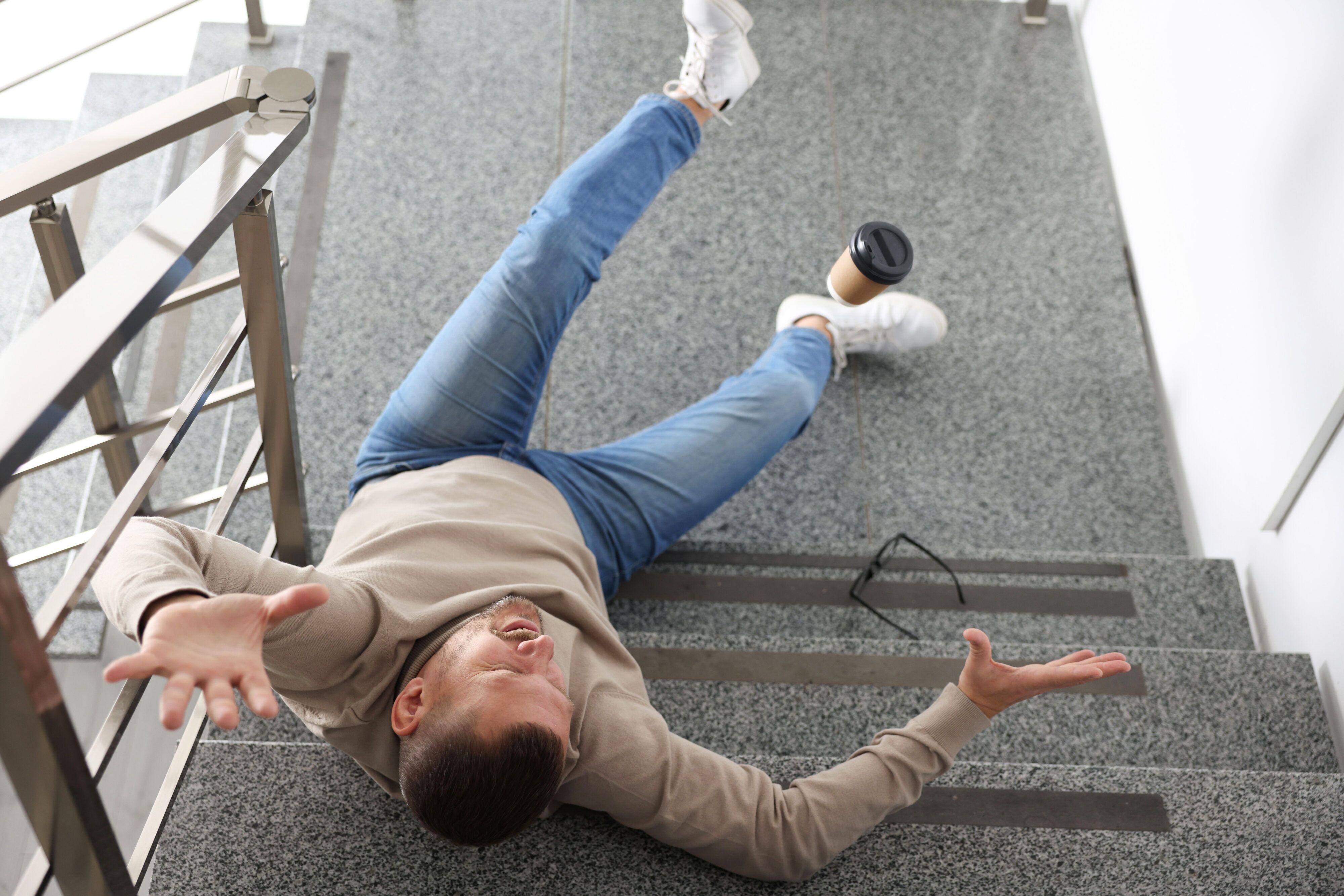
Yes, you may still be able to recover compensation after a slip-and-fall accident in Kentucky even if the hazard that caused your fall was open and obvious.
That was not always the case. Under Kentucky’s traditional approach, an open and obvious danger could prevent an injured person from recovering from a property owner. Beginning with a series of Kentucky Supreme Court decisions, Kentucky moved away from treating the open and obvious doctrine as an automatic bar to recovery.
Today, the fact that a hazard was visible is an important consideration – but not necessarily the deciding one. Courts may also consider whether the condition posed an unreasonable risk, whether the property owner exercised reasonable care, whether an injury was foreseeable, and whether the injured person also failed to act reasonably.
A Paducah slip-and-fall lawyer can investigate these issues and assess how Kentucky’s comparative fault rules may affect the claim.
Slip-and-Fall Injuries Can Be Serious
Falls can cause significant injuries at any age, but older adults are especially vulnerable. According to the CDC, falls are the leading cause of fatal and nonfatal injuries among adults age 65 and older.
Common injuries include:
- Broken Bones: Falls are a major cause of fractures, particularly hip fractures among older adults. Recovery may involve surgery, rehabilitation, and long-term mobility problems.
- Severe Lacerations: Falls against shelving, broken materials, pavement, or other sharp surfaces can cause deep wounds. If an infection develops and can be medically linked to the original injury, related treatment may also become part of the damages claim.
- Head and Brain Injuries: Falls can cause concussions and more serious traumatic brain injuries. Symptoms may include headaches, dizziness, memory problems, balance issues, difficulty concentrating, and changes in mood or behavior.
Pre-existing medical conditions can make the effects of a fall more serious. Under Kentucky’s eggshell plaintiff principle, a negligent party generally cannot escape responsibility simply because the injured person was unusually vulnerable to injury.
When a fall aggravates a pre-existing condition, compensation may be available for the additional harm caused by that aggravation.
What Is an Open and Obvious Hazard?
An open and obvious hazard is generally a condition whose existence and danger would be apparent to a reasonable person exercising ordinary perception and judgment. Examples may include a clearly visible pothole, a large obstruction in a walkway, an obvious change in floor elevation, a visible spill, or a damaged step.
But calling a condition open and obvious does not automatically end a Kentucky premises liability claim. Kentucky courts have recognized that a property owner may still have responsibility to address a dangerous condition even when a visitor can see it. One important question is whether the property owner should reasonably have anticipated that someone could be injured despite the hazard being apparent.
When Can a Property Owner Still Be Responsible?
Property owners and businesses generally have a duty to exercise reasonable care concerning unreasonably dangerous conditions affecting customers and other lawful visitors.
Whether that duty was breached depends on the circumstances. Consider a large spill in a grocery store aisle. Even if the spill is visible, the store may still have a responsibility to clean it up, warn customers, or otherwise address the danger.
Important questions may include how long the condition existed, whether employees knew or should have known about it, whether customers could reasonably avoid it, whether warnings were provided, and whether the property owner took reasonable steps to correct it.
There may also be circumstances when a visitor recognizes a hazard but has little practical choice except to encounter it. In other cases, distractions or surrounding conditions may draw attention away from the danger.
At the same time, the fact that a condition was open and obvious does not automatically make the property owner liable. A claim can still fail if the condition was not unreasonably dangerous, the property owner acted reasonably, or the evidence does not establish negligence.
How Comparative Fault Affects an Open and Obvious Slip-and-Fall Claim
Kentucky follows a pure comparative-fault system. If both the property owner and the injured person contributed to the accident, a judge or jury may assign each a percentage of fault. The injured person’s damages is then reduced by the percentage of fault assigned to them.
For example, a jury may find that a store was negligent in failing to correct an unreasonably dangerous condition while also finding that the injured customer failed to exercise reasonable care for their own safety. If the jury assigns 30% of the fault to the customer, the customer’s recoverable damages would generally be reduced by 30%.
An insurance company may argue that the injured person saw or reasonably should have seen the condition and could have avoided it. In response, the injured person’s attorney may present evidence showing why the hazard was difficult to appreciate, why avoiding it was impractical, or why the property owner should have anticipated the injury. Lighting, visual obstructions, distractions, and the surrounding environment can all influence that analysis.
A person’s physical condition may also be relevant. Older adults, for example, may have balance limitations, gait problems, or reduced vision that can affect how a fall occurs and the severity of the injuries. However, a medical condition does not automatically make an obvious hazard hidden, nor does it eliminate comparative fault. Each case turns on its particular facts.
Evidence Is Especially Important in Open and Obvious Hazard Cases
Because these cases often involve disagreements about what the injured person could reasonably perceive and what the property owner knew or should have done, evidence from the scene can be especially valuable.
Photographs and videos may show the hazard’s size, location and appearance, as well as lighting, signage, sight lines, and available alternate routes. Surveillance footage may establish how long a dangerous condition existed or whether employees passed it before the accident.
Maintenance records, inspection logs, incident reports, witness statements, and prior complaints may also help establish whether the property owner knew or should have known about the condition.
Prompt investigation is important because fall hazards often disappear quickly. A spill may be cleaned, merchandise moved, damaged flooring repaired, or surveillance footage overwritten.
The attorneys at Saladino & Schaaf may be able to investigate the circumstances of a serious fall and work to preserve evidence relevant to both the property owner’s negligence and comparative-fault.
Connect With Saladino & Schaaf, PLLC Today
An open and obvious hazard does not automatically prevent an injured person from pursuing a slip-and-fall claim in Kentucky. The condition itself, the property owner’s response, the foreseeability of the injury, the injured person’s conduct, and Kentucky’s comparative-fault may all influence whether compensation is available and how much can be recovered.
To schedule a free consultation with Saladino & Schaaf, PLLC, call (270) 444-0406 in Paducah or (270) 753-1529 in Murray, or contact us online. We do not charge upfront legal fees in these matters and represent injured clients throughout Western Kentucky.
