

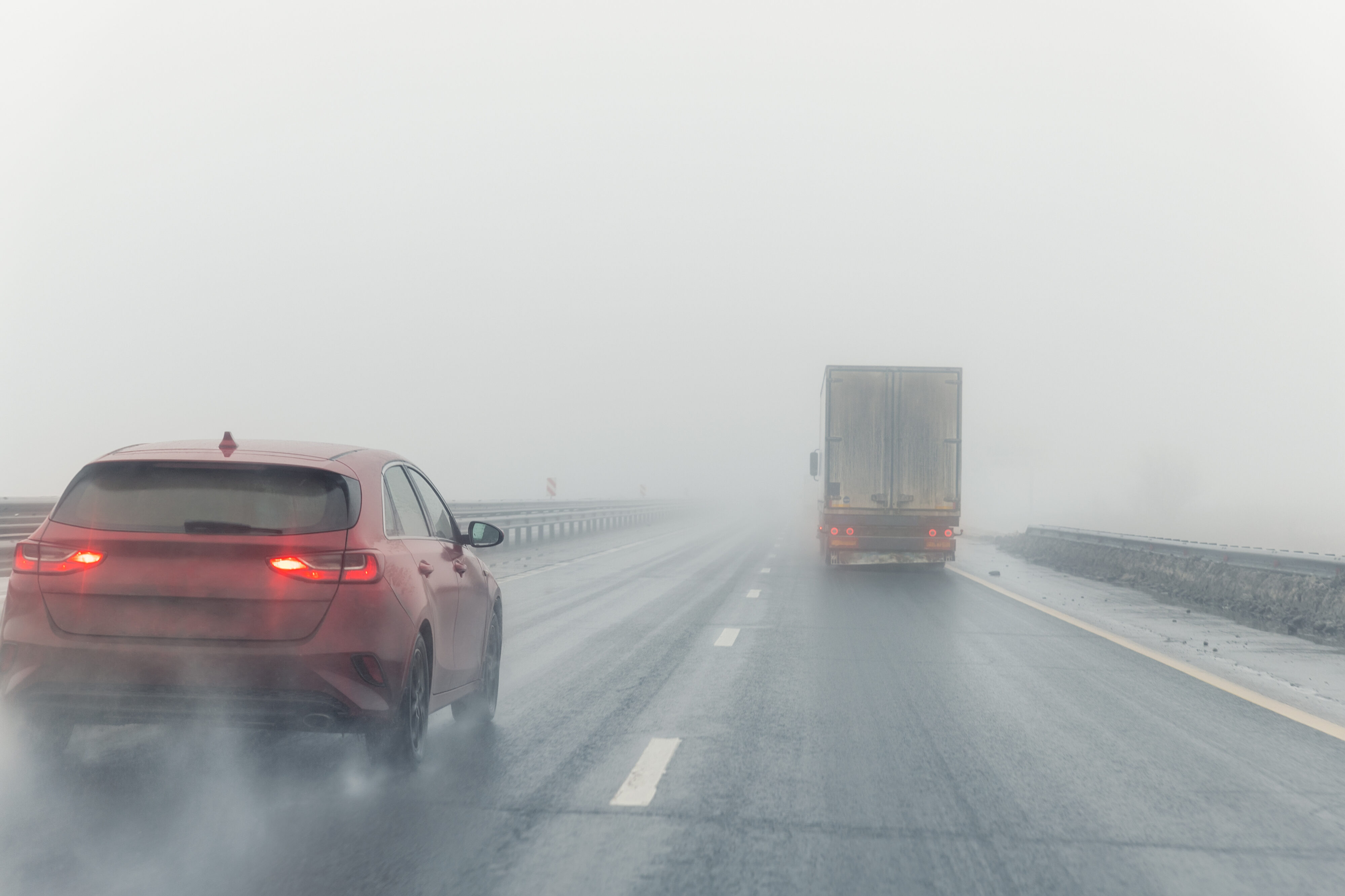
Kentucky weather-related vehicle accidents occur throughout the year and are not limited to winter driving conditions. Rain, fog, wind, heat, and sudden storms all increase the risk of serious crashes when drivers fail to adjust their behavior. While weather is often blamed for collisions, these crashes usually involve preventable human decisions made under hazardous conditions.
Large commercial trucks are especially vulnerable to extreme weather. Vehicles weighing up to 80,000 pounds require careful control even in ideal conditions. When weather reduces traction or visibility, these trucks become harder to manage. For passenger vehicle drivers, failing to prepare for hazardous weather conditions is often treated as a form of negligence rather than bad luck.
In most Kentucky weather-related vehicle accidents, weather is considered a contributing factor rather than the primary cause. Driver error, frequently involving impairment, distraction, or aggressive driving such as speeding, remains the leading cause of most collisions. When negligence substantially causes injury, Kentucky law allows victims to pursue compensation even if weather conditions also played a role.
Weather Does Not Automatically Excuse Negligence
Insurance companies often argue that weather caused a crash and that no driver should be held responsible. Under Kentucky law, this argument rarely succeeds on its own. Weather conditions are generally considered foreseeable rather than unexpected emergencies.
Drivers are expected to adjust speed, following distance, and driving behavior based on road and weather conditions. Continuing to drive at highway speeds in heavy rain, failing to slow down in dense fog, or operating a large truck during high winds may still qualify as negligent conduct. In these situations, weather does not excuse liability but instead highlights the driver’s failure to respond appropriately.
In Kentucky weather-related vehicle accidents, the central legal question is whether the driver acted reasonably under the circumstances. When obvious hazards are ignored, weather becomes part of the context rather than a legal defense.
Heavy Rain and Flooding
Light rain usually poses little danger. Sudden downpours are far more hazardous. Heavy rain reduces visibility and makes it difficult to see traffic, road hazards, and lane markings. Drivers who fail to reduce speed in these conditions can increase the risk of a collision.
Rain also mixes with oil residue on roadways, creating slick surfaces that reduce tire traction. Hydroplaning can occur even at moderate speeds, leading to sudden loss of control.
Flooding presents an even greater threat. Kentucky’s terrain includes many low-lying areas, creeks, and river valleys prone to flash flooding. Roads may become submerged with little warning. Drivers who attempt to cross standing water often cannot see washed-out pavement, debris, or deep water capable of disabling or sweeping away vehicles. Large trucks are also affected, as moving water can destabilize heavy vehicles and increase rollover risk.
Fog and Reduced Visibility
Fog is common in Kentucky, particularly in early morning hours near rivers and valleys. Dense fog can limit visibility to only a few feet, making it difficult to judge distance or detect stopped traffic in time to react safely.
Fog-related crashes often involve multiple vehicles, especially on highways, when drivers fail to slow down enough for conditions. These Kentucky weather-related vehicle accidents frequently involve disputes over following distance, speed, and reaction time.
Commercial trucks face added challenges due to longer stopping distances. Despite these risks, some drivers continue traveling at unsafe speeds to meet delivery schedules, increasing the likelihood of severe collisions.
Winter Weather: Snow and Ice
Kentucky winters are generally mild, but sudden ice storms can create some of the most dangerous driving conditions of the year. Freezing rain produces black ice, which is nearly invisible and far slicker than snow-covered pavement. Bridges and overpasses freeze first, often catching drivers off guard.
Even small amounts of snow can create hazardous conditions. Slush and compacted snow reduce tire grip and increase stopping distances. For tractor-trailers, icy roads increase the risk of jackknifing, where the trailer swings out of alignment with the cab. Rural roads that receive delayed treatment are also dangerous.
High Winds and Severe Storms
Kentucky frequently experiences strong thunderstorms and high winds. Sudden gusts can push vehicles out of their lanes, particularly high-profile vehicles such as tractor-trailers, vans, and SUVs. Steering becomes unpredictable, especially on open highways and bridges.
Insurance companies often argue that wind was so severe it became the primary cause of a crash rather than the contributing factor. These cases frequently involve disputes over whether the driver acted reasonably under the circumstances or should have slowed down or stopped altogether.
High winds also contribute indirectly to Kentucky weather-related vehicle accidents. Severe storms can knock tree branches, debris, and power lines onto roadways. Crashes involving sudden obstacles may raise issues related to the sudden emergency doctrine, which only applies when a driver responds reasonably to an unforeseeable hazard.
Heat and Summer Hazards
Summer weather introduces different risks. Prolonged heat increases the likelihood of tire blowouts, particularly when tires are worn or underinflated. Blowouts at highway speeds often lead to loss-of-control or multi-vehicle crashes.
Heat also contributes to driver fatigue. Long trips combined with high temperatures reduce alertness and reaction time. Construction zones, which are more common during warmer months, add another layer of risk by narrowing lanes and altering traffic patterns.
Autumn brings another overlooked hazard. Wet leaves can be as slippery as ice, particularly on winding rural roads. Leaves may also obscure lane markings, shoulders, and potholes, causing drivers to misjudge road conditions and lose control.
Evidence That Matters in Weather-Related Accident Cases
Fault in Kentucky weather-related vehicle accidents is typically established through objective evidence rather than opinion. Vehicle speed data, braking activity, dashcam footage, roadway maintenance records, and official weather reports often play a key role.
In truck accidents, electronic data may reveal whether a driver reduced speed or continued operating despite unsafe conditions. Maintenance records can also show worn tires or braking issues that made weather hazards more dangerous. This evidence frequently undermines claims that a crash was unavoidable.
Common Mistakes After Weather-Related Crashes
Many injured drivers unintentionally damage their claims after weather-related crashes. Statements such as “the weather caused it” are often taken out of context and used to deny responsibility.
Failing to photograph road conditions, visibility, and vehicle damage can also weaken a case. Weather conditions change quickly, and what seems obvious at the scene may be difficult to prove later. Delaying medical treatment is another common issue, as insurers frequently argue that injuries were minor or unrelated when treatment gaps exist.
Call the Attorneys at Saladino & Schaaf, PLLC
Kentucky weather-related vehicle accidents can happen in any season. While weather may contribute to a crash, drivers and commercial operators still have a duty to anticipate hazards and adjust their behavior accordingly.
If you were injured in a weather-related vehicle accident, contact the attorneys at Saladino & Schaaf, PLLC at (270) 444-0406 or reach out online to schedule a free consultation. We handle these cases on a contingency fee basis and represent clients throughout western Kentucky. Our offices are conveniently located in Paducah and Murray.