

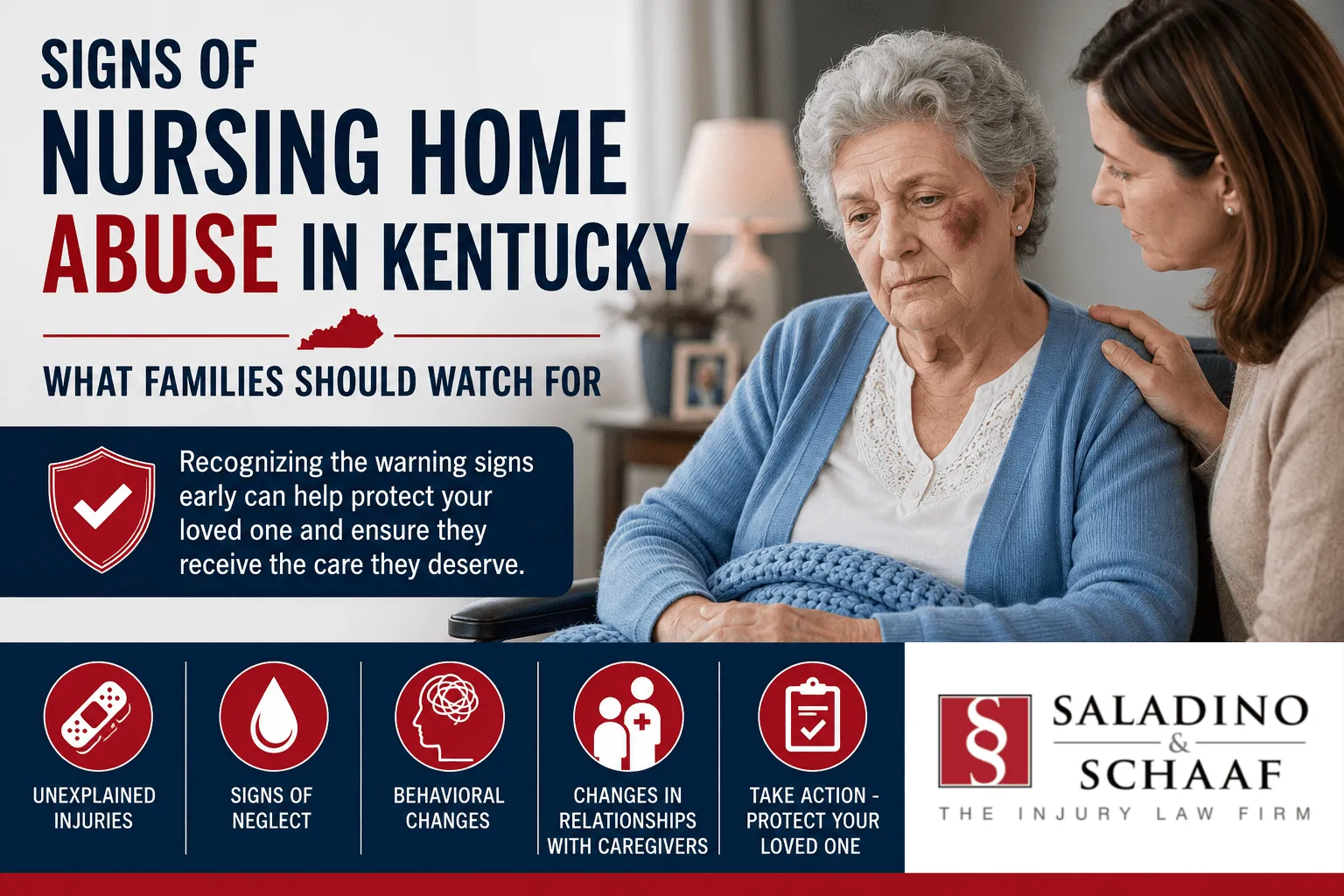
Nursing home abuse and neglect can be difficult to detect, especially when residents are unable or unwilling to communicate what they are experiencing. Family members are often the first to notice subtle changes in a loved one’s physical condition, emotional well-being, behavior, or relationships with caregivers.
While many nursing homes provide quality care, abuse and neglect remain serious concerns in Kentucky and across the country. Recognizing the warning signs early can help protect vulnerable residents from further harm and ensure they receive the care they deserve.
Understanding the most common signs of nursing home abuse and neglect in Kentucky is an important step toward protecting your loved one.
Physical Injuries and Unexplained Wounds
Bruises, abrasions, cuts, fractures, and sprains rarely occur without an underlying cause. While some injuries may result from accidental falls or pre-existing medical conditions, unexplained injuries should always be taken seriously.
Physical abuse often involves pushing, grabbing, striking, restraining, or otherwise using unnecessary force against a resident. Because nursing home residents are often elderly or physically frail, even a relatively minor use of physical force can result in significant injuries.
Families should pay particular attention to recurring injuries, inconsistent explanations, or injuries that staff members cannot adequately explain. Injuries located in unusual locations, such as the wrists, upper arms, or torso, may warrant closer scrutiny.
In some cases, another resident may be responsible for causing harm. Resident-on-resident violence can occur when facilities fail to properly supervise residents, particularly those suffering from dementia or other cognitive impairments. When a nursing home fails to maintain a safe environment, it may be held responsible for resulting injuries.
Signs of Neglect
Neglect is often more common than outright physical abuse. Unlike abuse, neglect usually involves a failure to provide appropriate care rather than intentional misconduct.
Common signs of neglect include:
- Unexplained weight loss
- Dehydration
- Poor hygiene
- Bedsores or pressure ulcers
- Unsanitary living conditions
- Missed medications
- Frequent infections
These conditions may result from inadequate staffing, poor supervision, or failures to follow established care plans. Regardless of the cause, neglect can have devastating consequences for vulnerable residents.
Family members should pay close attention to sudden declines in health, cleanliness, or overall well-being.
Personality and Behavioral Changes
Changes in personality or behavior are often among the earliest warning signs that something is wrong.
Residents who were once social and engaged may become withdrawn, anxious, depressed, fearful, or unusually agitated. Others may become reluctant to speak openly when certain staff members or caregivers are present.
In some cases, unusual sexual comments, fear of specific caregivers, reluctance to be left alone with staff members, or sudden changes in behavior may indicate sexual abuse. Emotional or psychological abuse can also lead to dramatic shifts in mood, confidence, or willingness to interact with others.
While behavioral changes do not automatically establish that abuse has occurred, they should not be dismissed or ignored.
Changes in Relationships with Caregivers
Abuse and neglect often affect the relationship between residents and caregivers. Some residents may become fearful of certain staff members and attempt to avoid them, while others may appear unusually submissive or reluctant to voice concerns.
Family members should pay close attention to any sudden changes in how their loved one responds to or interacts with nursing home employees. A resident who becomes visibly anxious or fearful when a particular caregiver enters the room may be exhibiting a significant warning sign.
Similarly, caregivers who consistently prevent private conversations between residents and their family members may raise concerns that warrant further investigation.
Responding to the Warning Signs
If you suspect nursing home abuse or neglect, it’s important to document your concerns and address them promptly.
When appropriate, take photographs of visible injuries, keep records of conversations with staff members, and make notes regarding changes in your loved one’s physical condition or behavior. Families should ask questions, seek explanations, and follow up to ensure their concerns are being taken seriously.
The attorneys at Saladino & Schaaf, PLLC understand that many families are reluctant to assume the worst. However, waiting too long can make it more difficult to gather evidence and protect a vulnerable resident from further harm.
If the facility fails to respond appropriately or the resident’s safety remains at risk, additional action may be necessary.
Families who have concerns about a nursing home’s quality of care can review inspection reports, staffing information, and quality ratings using Medicare’s Care Compare nursing home search tool.
Kentucky Nursing Home Neglect Lawyers Saladino & Schaaf Can Help
The attorneys at Saladino & Schaaf, PLLC can help families investigate suspected nursing home abuse and pursue compensation when residents have been harmed by abuse, neglect, or inadequate supervision.
To schedule your free consultation, call (270) 444-0406 (Paducah) or (270) 753-1529 (Murray) or contact us online. The sooner you reach out, the sooner your case can be properly evaluated. Our offices are conveniently located in Paducah and Murray.