

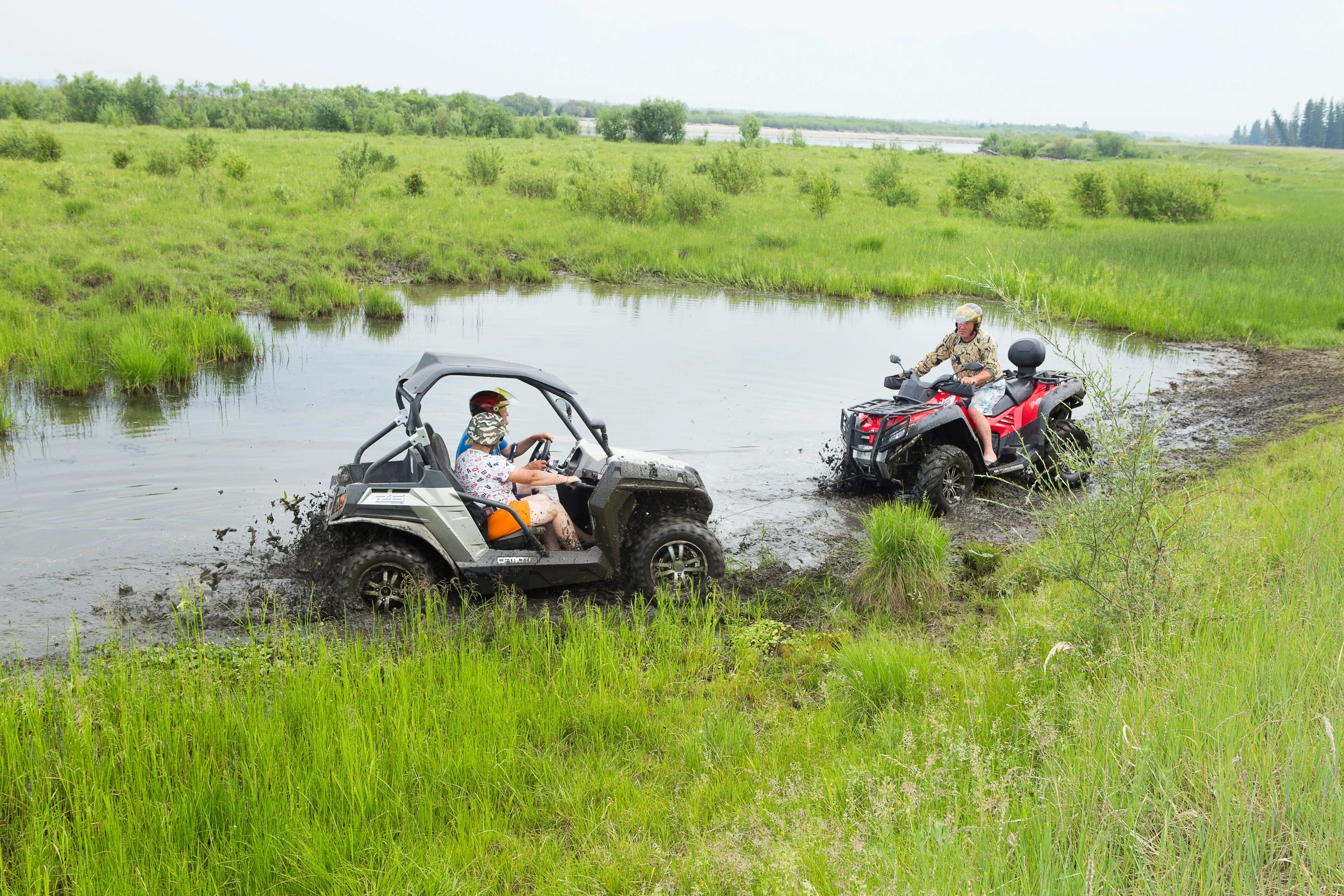
Kentucky ATV and UTV passenger injuries can be devastating, even when the injured person was not operating the vehicle. A rollover, ejection, collision, or sudden loss of control may leave a passenger facing extensive medical treatment, lost income, and lasting physical limitations.
These accidents are particularly relevant in Kentucky. According to the U.S. Consumer Product Safety Commission, off-highway vehicles are associated with roughly 100,000 emergency department-treated injuries each year nationwide. Kentucky was also among five states that accounted for more than 30 percent of reported OHV deaths from 2018 through 2020.
When a passenger is injured, responsibility may rest with the ATV or UTV operator, a property owner, a vehicle manufacturer, or more than one party. The passenger’s own conduct may also become an issue in some cases.
A Paducah personal injury lawyer may be able to investigate how the accident happened, identify the parties who may be responsible, and determine what insurance coverage or other sources of compensation may be available.
Common ATV and UTV Passenger Injuries
ATVs and UTVs provide relatively little protection compared with passenger vehicles. Rollovers and ejections can expose occupants to direct impacts with the ground, trees, rocks, the vehicle itself, or other objects.
The CPSC reports that fractures, contusions and abrasions, and internal organ injuries are among the most common injuries associated with off-highway vehicle accidents. Serious accidents may also cause traumatic brain injuries, spinal injuries, and other potentially disabling conditions.
Passenger injuries may include:
- Head and Brain Injuries: Helmets can reduce the risk of serious head injury, but they cannot prevent every traumatic brain injury. A violent impact or rollover can cause concussions and more severe brain trauma, sometimes resulting in long-term cognitive, behavioral, or physical symptoms.
- Broken Bones and Orthopedic Injuries: Passengers may suffer fractures when they are thrown from an ATV or struck during a UTV rollover. Arms, wrists, legs, ribs, shoulders, and other areas can be injured, and severe fractures may require surgery and rehabilitation.
- Internal and Spinal Injuries: Blunt-force trauma can damage internal organs or cause internal bleeding that is not immediately obvious after an accident. Rollovers and ejections can also cause serious neck, back, or spinal cord injuries.
The type of vehicle matters as well. Many traditional ATVs are designed for a single rider, while UTVs and recreational off-highway vehicles commonly include designated passenger seating and restraints. The CPSC warns against carrying passengers on single-rider ATVs and against carrying more passengers than a vehicle has seats and restraints.
When the ATV or UTV Operator May Be Responsible
Operator negligence is one of the most common potential sources of liability in a passenger injury case.
An operator may cause an accident by driving too fast for the terrain, taking a turn too aggressively, operating while impaired, carrying more passengers than the vehicle was designed to accommodate, ignoring weather or trail conditions, or otherwise failing to operate the vehicle with reasonable care.
Alcohol can be particularly dangerous when operating an ATV or UTV because these vehicles often require quick reactions, balance, and careful judgment on uneven terrain. The CPSC advises riders not to consume alcohol before or while operating an off-highway vehicle.
Kentucky also has specific laws governing ATV use. For example, state law requires a person under 16 who is operating or riding as a passenger on an ATV to wear approved protective headgear while the vehicle is in motion. Kentucky law also places restrictions on minors operating ATVs and carrying passengers.
A violation of a safety rule may become relevant when determining how the accident happened, although liability ultimately depends on the facts of the individual case.
Can an Injured Passenger Be Partially at Fault?
An insurance company may argue that an injured passenger contributed to the accident or the resulting injuries.
For example, questions may arise if a passenger knowingly rode with an impaired or dangerously reckless operator, rode as a passenger on an ATV designed for only one person, refused to use an available restraint, or engaged in other unsafe conduct.
That does not necessarily eliminate the passenger’s claim.
Kentucky follows a comparative-fault system that allows fault to be allocated among parties whose conduct contributed to an injury. If an injured passenger is assigned a percentage of fault, the passenger’s compensation can be reduced according to that percentage. Understanding how comparative negligence in Kentucky works can help injured passengers better understand how shared responsibility may affect their claim.
Simply agreeing to ride on an ATV or UTV does not mean a passenger automatically accepts the consequences of another person’s negligent operation. Whether the passenger’s own conduct contributed to the accident or injuries depends on the specific circumstances.
ATV and UTV accidents can also have more than one contributing cause. An operator may be traveling too fast, for example, while defective equipment or unsafe terrain also contributes to a rollover. Identifying each contributing factor can be an important part of determining who may be responsible.
When a Property Owner May Be Responsible
ATV and UTV accidents frequently occur on farms, trails, hunting property, recreational land, and other private property throughout Kentucky.
A property hazard may sometimes contribute to an accident. Examples could include an unmarked excavation, a concealed drop-off, a damaged trail, or another dangerous condition that causes an operator to lose control.
However, property-owner liability is not automatic.
Kentucky’s Recreational Use Statute can significantly limit the liability of landowners who make property available to others without charge for recreational activities. The statute contains exceptions, including certain circumstances involving a willful or malicious failure to guard or warn against a dangerous condition and situations in which the property owner charges for recreational use.
Whether a property owner may be responsible for an ATV or UTV accident can depend on who controlled the property, why the riders were there, whether a fee was charged, what the owner knew about the hazard, and the circumstances surrounding the accident.
Determining that a dangerous condition existed is therefore only part of the analysis. The nature of the property, the rider’s reason for being there, and the protections available to the landowner under Kentucky law may also affect the claim.
When an ATV or UTV Manufacturer May Be Responsible
Some passenger accidents are caused or worsened by a problem with the vehicle itself.
Kentucky product liability law can apply to claims involving the manufacture, design, assembly, testing, warnings, instructions, marketing, and labeling of products. A manufacturer is not automatically responsible simply because an ATV or UTV was involved in an accident. An injured person must establish the facts necessary to support a product liability claim, and Kentucky law provides manufacturers with certain statutory defenses and presumptions.
- Design defect: A claim may arise when the design of a vehicle or safety component creates an unreasonable danger. Depending on the facts, these cases may involve rollover resistance, occupant protection, restraint systems, doors, steering, braking, or other vehicle characteristics.
- Manufacturing defect: This defect involves a problem that occurs during production or assembly so that the particular vehicle or component does not perform as intended.
- Failure-to-warn claim: A claim may arise when adequate warnings or instructions concerning a known or reasonably foreseeable danger were not provided.
Defective safety components can have serious consequences in ATV and UTV accidents. For example, the CPSC has announced recalls involving UTVs with defects affecting passenger restraint systems, including seat belt anchors that could separate from the vehicle frame during a crash.
Kentucky law also recognizes defenses involving unauthorized vehicle modifications and a failure to exercise ordinary care when using a product if that conduct substantially contributes to the accident. For that reason, modifications, maintenance history, aftermarket equipment, and the condition of the vehicle can become important evidence in a product liability claim.
Preserving Evidence After an ATV or UTV Accident
Determining responsibility for Kentucky ATV and UTV passenger injuries often requires more than a police or accident report. Evidence from the accident scene, the vehicle, and the people involved can help establish how the crash occurred and who may be liable.
The ATV or UTV itself can be one of the most important pieces of evidence. If a mechanical failure, restraint defect, tire problem, steering issue, or other vehicle problem may have contributed to the crash, the vehicle should generally be preserved in its post-accident condition until it can be properly inspected.
Photographs of the accident scene, terrain, vehicle damage, helmets and restraints, skid or tire marks, and nearby hazards can also help explain what happened. Maintenance records, owner manuals, recall information, witness statements, cellphone evidence, and available GPS or electronic data may become relevant depending on the circumstances.
The attorneys at Saladino & Schaaf, PLLC may be able to investigate the operator’s conduct, the condition of the property, and the ATV or UTV itself to determine whether multiple parties may share responsibility for a passenger’s injuries.
Reach Out to Saladino & Schaaf, PLLC Today
If you or a loved one was injured as a passenger in a Kentucky ATV or UTV accident, Saladino & Schaaf, PLLC can evaluate what happened and determine what avenues for compensation may be available.
To schedule your free consultation, call (270) 444-0406 in Paducah or (270) 753-1529 in Murray, or contact us online. We represent injured clients throughout McCracken County, Calloway County, and surrounding Western Kentucky communities.